Translate

Tuesday, June 3, 2014

This Week Lifestyle In Luxury Motorhome's


Bella Terra of Gulf Shores RV Resort: Luxury RVing on the Alabama Coast


Bella Terra RV Resort
Home  

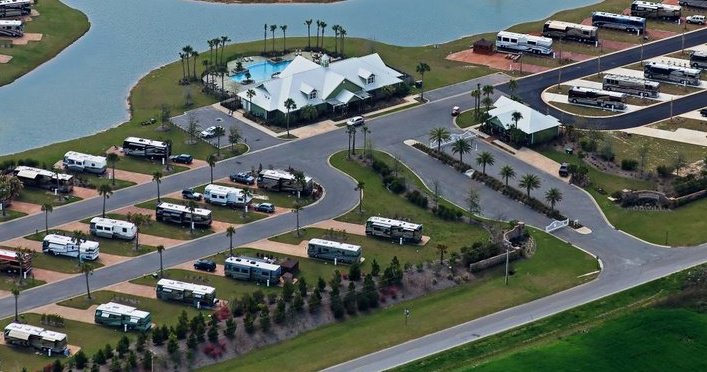
To brilliant sunsets and unforgettable good times, Gulf Shores, Alabama is also the site of Bella Terra of Gulf Shores, a resort that brings luxury RVing to life in a tropical oasis. The 40-acre resort is ideally located just 6.5 miles north of the Gulf of Mexico, allowing quick access to the beautiful beaches of the Emerald Coast.
Bella Terra RV Resort


Surrounded by lush farmland, Bella Terra is the perfect respite from outside distractions, but still just minutes from shopping, dining and entertainment. And there’s more good news in that direction: the Blue Collar Comedy Entertainment company recently closed on a property two miles north of the resort, initiating a $175-million dollar entertainment complex that’s scheduled to open in 2015.


266267_10150255521924839_3536824_o


This winning combination of beautiful natural surroundings and nearby attractions with top-notch facilities has not gone unnoticed in the luxury RVing community, with buyers coming in both from the U.S. and Canada. “Our motor coach-exclusive facility that has grown steadily since opening in 2008,” said Activities and Operations Manager, Courtney Fox. “Since then, Bella Terra has gained national recognition for its remarkable facilities, outstanding customer service and spacious lots.”


22469_214848424838_7832316_n


Upscale amenities include a 6,000-square-foot clubhouse, available to guests 24-hours-a-day with a fully equipped fitness center, a private movie theater, a massage room and a bar. The infinity-edge pool is open year round—a favorite of the snowbird guests. “We’re also pet friendly!” said Courtney. “Our fenced-in dog park is an ideal feature for families traveling with their furry friends.”

Bella Terra RV Resort


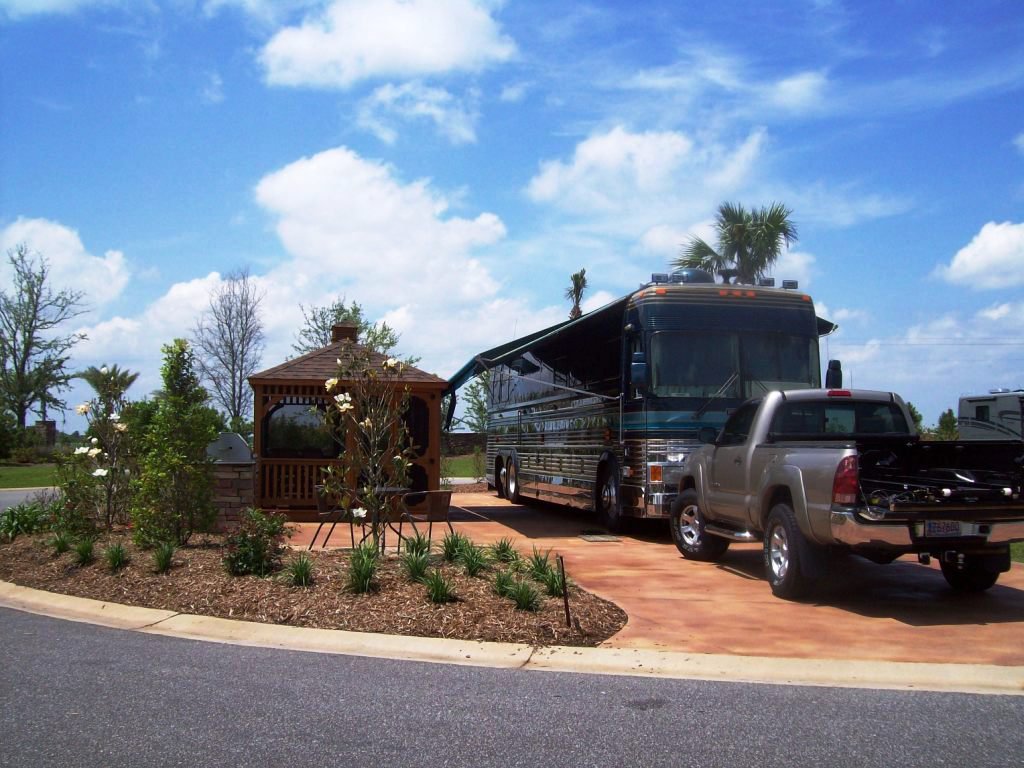
The final phase of this award-winning resort opened this spring, adding 65 more deeded lots to the inventory. In addition to full ownership, they also offer RV lot rentals. All lots include professional landscaping for privacy, concrete pads, built-in patios, utility hook-ups and optional upgrades including gazebos, outdoor entertainment centers, and storage units.
Their over-sized Class A RV lots – some as large as 5,000 square feet – are designed to satisfy Class A RV motor coach needs.
For more details on this truly top-notch luxury RV resort or to book online, visit www.bellaterrarvresort.com.


lifestyles In Luxury Motorhome's

Friday, May 23, 2014

Interview Only the Best Drivers "Star" System


Interview only the best drivers

Scheig Associates’ solutions ensure that only superior applicants make it to the interview phase.

Scheig Associates, Gig Harbor, WA, was founded in 1980 by Dr. Richard F. Scheig. Scheig has developed over 80 job-specific hiring systems for companies in North America, the United Kingdom and Australia, serving the transportation, education, distribution, construction, healthcare, insurance, childcare, call center, banking and sales industries.


Scheig Associates began developing and marketing pre-employment systems in 1991, and that has since become the core of the company’s business.


According to Scheig, the company’s assessments identify an applicant’s future performance at an 88 percent accuracy rate.
Recently, the United Motorcoach Association (UMA) announced a partnership with Scheig Associates to provide discounted pre-employment performance testing to its members. UMA members will save 10 percent on Scheig Associates’ Motor Coach Works© Hiring & Performance System™ designed specifically for the motorcoach industry to identify, select and hire better, safer drivers.


Scheig’s the Motor Coach Works Hiring & Performance System is a three-phase system consisting of an online pre-employment assessment, behaviorally based interview questions and a performance evaluation.


UMA says it partnered with Scheig upon hearing from several association members of their satisfaction and success with Scheig’s hiring and employee performance solutions.


“The Scheig performance testing program has been a tremendous tool in helping Escot find the right employees,” said Brian Scott of Escot Bus Lines, Largo, FL, in a release. “I know it will help other operators be more successful in their hiring processes and I think it’s a great addition to UMA’s member programs.”


“We’re really excited to be able to offer a discount on our hiring and performance system to UMA members,” said Leslie Williams, national accounts manager with Scheig Associates, in the same release. “Through our extensive experience and proven track record with the motorcoach industry, we know we will become a valuable tool and asset for all UMA operators.”
Dr. Scheig says his assessments begin with a thorough job analysis of “superior performers.” These are employees (in this case, superior motorcoach drivers) whom companies have identified as the best of the best. Scheig says this ensures that new applicants are measured against the best employees currently doing the job. This ensures that only the best applicants make it to the job interview phase.


Reaching out to transit
Scheig’s next project in the transportation industry involves creating a test for superior transit drivers. For this, he needs ten superior drivers selected from the nation’s transit agencies. These drivers, coupled with a modest down-payment, will spend a weekend helping Scheig Associates develop an assessment for the transit industry. The companies they represent will make their money back by receiving the product at a reduced price.


Dr. Scheig says his company is recognized for the accuracy and predictability of its assessments, stemming from the unique methodology that focuses on specific job behaviors which account for variances in productivity outcomes. With an unprecedented degree of accuracy, Scheig’s hiring and performance systems assist companies to hire, retain and develop the best possible employees.
Using innovative software-as a-service (SaaS) technologies, Scheig’s offered solutions include:
  • Job-specific behaviorally based hiring and performance systems
  • Human resource consulting
  • Behavioral job analysis
  • Selection process design
  • Entry and professional level assessments & hiring systems
Scheig’s employees are Ph.D. level social scientists, business and management consultants, software designers and service professionals collaborating to serve the business needs of the company’s clients. Scheig says they always strive to reflect the highest ethical standards with clients, forging long-term relationships built on appreciation, mutual respect and trust.

Monday, May 12, 2014

WELCOME ABOARD Greyhound's - 7725!

1960 General Motors PD-4104-4503 - Greyhound Lines


WELCOME ABOARD THE 7725!

This General Motors PD-4104-4503 was built in 1960 for Greyhound Lines. She was given the fleet number -7725- at that time. These buses were commonly referred to as highway travelers.


* the 7725 is 35 feet long, 8 feet wide, 10 feet tall and weighs 10 tons.
* fuel capacity is 140 gallons of #2 diesel. Transmission: 4 speed manual.
* power is an in line Detroit Diesel six cylnder.
* 187 cubic feet of luggage space.
* air conditioned by a 4 cylinder Perkins diesel engine.
* restroom equipped.
* air ride suspension.
* 7725 is the 4,503 coach of its type Built by GM between 1953 and 1960.
* a total of 5,065 were manufactured.

7725 has been restored in this green and white livery to better compliment her interior colors. The 7725 is owned & operated by Mike Jones of Alpine, California. Our other restored coach is a 1975 GMC T8H-5307a, fleet number 804, retired from San Diego Transit in 1990. Both coaches are part of an extensive collection of streetcar & motorcoach memorabilia displayed at the Jones' residence in Alpine, California. Thank you for visiting this classic American motorcoach! Please! NO food, drinks or smoking aboard!

Thursday, January 16, 2014

Prince George the Central Gateway of B.C.


Prince George is located along two major highway routes.


Highway 97 (the Hart Highway) leads to northern communities such as Dawson Creek, Whitehorse and Alaska, USA and to  northeast BC  and south to Cache Creek, connecting to southern BC communities including Kamloops, Kelowna and Vancouver.

Highway 16 leads northwest to Smithers, Terrace and Prince Rupert and eastern communities Mcbride, Jasper National Park and Edmonton, Alberta.  As many of communities activities are located just outside of town, car travel is recommended. Rental options are available in town, and winter tires are a must in season.

Air Travel

Flights to Prince George are available via Vancouver, Edmonton, Calgary and Fort St. John. The two largest passenger airlines servicing Prince George are WestJet and Air Canada, with smaller carriers Central Mountain Air and Northern Thunderbird Air. 

Visitors requiring transportation into town or to the airport from Prince George can take a taxi or catch a ride with the airport shuttle. Greyhound also provides bus transportation from the airport terminal to the Greyhound terminal in Prince George.


Bus Travel

Greyhound provides bus service to and from Prince George along Highway 97 and Highway 16. The Prince George Transit System also runs a number of buses around town.

Rail Travel

VIA Rail offers service from Prince George through Jasper, Alberta to Vancouver, and through Smithers and Terrace to Prince Rupert. Wildlife such as deer, moose and bears can sometimes be viewed from the train.
Read Less

Transportation Service Providers


Air / Airports 1 Listings
Bus / Coach / Shuttle 1 Listings
Limo / Taxi / Water taxi 1 Listings

Friday, January 10, 2014

Greyhound Station Art Deco Architecture

Entrance, Greyhound Bus Station, Jackson, Mississippifrom Roadside Architecture: Greyhound Bus Stations
Entrance of Jackson’s old bus station — now an architecture firm’s office. This  architect is my HERO! Meanwhile this bus station was part of Civil  Rights history.
From the site:

The Jackson  station was built from 1937-1938.  This is the only  station that  Arrasmith designed with a structural glass faced exterior.   Originally,  the interior had a coffee shop with a horseshoe-shaped  counter.  The  men’s room had a shower, while the women’s room had a  bath tub.  It was  condemned when architect Robert Parker Adams bought  the building in  1988.  He restored it as office space for his  architectural firm.  This  station is also part of desegregation  history.  Freedom Riders were arrested here for using white restrooms and waiting rooms.


Stations

Entrance, Greyhound Bus Station, Jackson, Mississippi
from Roadside Architecture: Greyhound Bus Stations
Entrance of Jackson’s old bus station — now an architecture firm’s office. This architect is my HERO! Meanwhile this bus station was part of Civil Rights history.
From the site:
The Jackson station was built from 1937-1938. This is the only station that Arrasmith designed with a structural glass faced exterior. Originally, the interior had a coffee shop with a horseshoe-shaped counter. The men’s room had a shower, while the women’s room had a bath tub. It was condemned when architect Robert Parker Adams bought the building in 1988. He restored it as office space for his architectural firm. This station is also part of desegregation history. Freedom Riders were arrested here for using white restrooms and waiting rooms.
Interior, Former Greyhound Bus Station, Jackson, Mississippifrom Roadside Architecture: Greyhound Bus Stations Interior shot of Jackson’s old bus station — now an architecture firm’s office. This architect is my HERO! From the site: The Jackson station was built from 1937-1938. This is the only station that Arrasmith designed with a structural glass faced exterior. Originally, the interior had a coffee shop with a horseshoe-shaped counter. The men’s room had a shower, while the women’s room had a bath tub. It was condemned when architect Robert Parker Adams bought the building in 1988. He restored it as office space for his architectural firm. This station is also part of desegregation history. Freedom Riders were arrested here for using white restrooms and waiting rooms. Interior, Former Greyhound Bus Station, Jackson, Mississippi from Roadside Architecture: Greyhound Bus Stations Interior shot of Jackson’s old bus station — now an architecture firm’s office. This architect is my HERO! From the site: The Jackson station was built from 1937-1938. This is the only station that Arrasmith designed with a structural glass faced exterior. Originally, the interior had a coffee shop with a horseshoe-shaped counter. The men’s room had a shower, while the women’s room had a bath tub. It was condemned when architect Robert Parker Adams bought the building in 1988. He restored it as office space for his architectural firm. This station is also part of desegregation history. Freedom Riders were arrested here for using white restrooms and waiting rooms.


Interior, Former Greyhound Bus Station, Jackson, Mississippifrom Roadside Architecture: Greyhound Bus Stations
Interior shot of Jackson’s old bus station — now an architecture firm’s office. This  architect is my HERO!
From the site:

The Jackson  station was built from 1937-1938.  This is the only  station that  Arrasmith designed with a structural glass faced exterior.   Originally,  the interior had a coffee shop with a horseshoe-shaped  counter.  The  men’s room had a shower, while the women’s room had a  bath tub.  It was  condemned when architect Robert Parker Adams bought  the building in  1988.  He restored it as office space for his  architectural firm.  This  station is also part of desegregation  history.  Freedom Riders were arrested here for using white restrooms and waiting rooms.


Interior, Former Greyhound Bus Station, Jackson, Mississippi
from Roadside Architecture: Greyhound Bus Stations
Interior shot of Jackson’s old bus station — now an architecture firm’s office. This architect is my HERO!

Detail, Greyhound Bus Station, Jackson, Mississippifrom Roadside Architecture: Greyhound Bus Stations
Detail of Jackson’s old bus station — now an architecture firm’s office.
From the site:

The Jackson  station was built from 1937-1938.  This is the only  station that  Arrasmith designed with a structural glass faced exterior.   Originally,  the interior had a coffee shop with a horseshoe-shaped  counter.  The  men’s room had a shower, while the women’s room had a  bath tub.  It was  condemned when architect Robert Parker Adams bought  the building in  1988.  He restored it as office space for his  architectural firm.  This  station is also part of desegregation  history.  Freedom Riders were arrested here for using white restrooms and waiting rooms.
Detail, Greyhound Bus Station, Jackson, Mississippi
from Roadside Architecture: Greyhound Bus Stations
Detail of Jackson’s old bus station — now an architecture firm’s office.


Greyhound Bus Station, Jackson, Mississippifrom Roadside Architecture: Greyhound Bus Stations
Jackson’s old bus station is now an architecture firm’s office. This architect is my HERO! Meanwhile this bus station was part of Civil Rights history.
(First of several pics of this lovely bit of historic preservation…)
From the site:

The Jackson  station was built from 1937-1938.  This is the only station that  Arrasmith designed with a structural glass faced exterior.  Originally,  the interior had a coffee shop with a horseshoe-shaped counter.  The  men’s room had a shower, while the women’s room had a bath tub.  It was  condemned when architect Robert Parker Adams bought the building in  1988.  He restored it as office space for his architectural firm.  This  station is also part of desegregation history.  Freedom Riders were arrested here for using white restrooms and waiting rooms.
Greyhound Bus Station, Jackson, Mississippi
from Roadside Architecture: Greyhound Bus

Friday, January 3, 2014

Bus Driver's - " Most Stressful Gig in Town "


  Bus drivers have the most stressful gig in town, according to WorkSafeBC figures.


Since July 1 199 transportation workers  mostly bus drivers but also including cabbies have submitted claims for work-related mental disorders, including those caused by significant stressors on the job such as bullying and harassment.

A fairly common type of case we are seeing are bus drivers being submitted to insults from passengers, said senior program manager Joe Pinto.

In one case, it escalated to include threatening behaviours. [The employee] had to stop working because it turned into a disorder.


Mental Health Claims :


There were more mental health claims submitted from the health care and social services sector, with 463, but health care employs substantially more workers than transportation.
The hospitality industry came in third with 141 claims; 134 from retail, and 105 from education.

Don McLeod, head of the Canadian Auto Workers Local 111 which represents Metro Vancouver bus drivers, said there are about150 reported assaults on bus drivers every year.

As front-line employees, bus drivers often bear the brunt of passenger frustration and anger and are vulnerable to verbal abuse, getting spit on, or more violent forms of physical abuse.

“I have no doubt there are mental health issues in all workplaces, but the type of job we do has the potential to push somebody to the brink a lot quicker,” said McLeod.

 WorkSafeBC is expecting the number of mental health claims to more than double after new legislation came into effect July 1.
It estimates it will receive 2,500 claims over the one-year period since the bill was passed. It used to receive only 1,100 claims annually.

Under the new law, workers who develop mental health issues because of significant workplace stress, including bullying or harassment, are now eligible for compensation.

The cases have to be a recognized mental disorder diagnosed by a psychologist or psychiatrist; they cannot be disorders from stress caused by employer decisions, such as working conditions or workload.

Under previous legislation, workers were only eligible if their mental disorder stems from an unexpected, acute work-related traumatic events, such as firefighters or paramedics who witness horrific accidents, for example, or retail workers or bank tellers traumatized by a holdup.

Sunday, October 6, 2013

The Closure of Owen Sound’s Bus Terminal


The closure of Owen Sound’s bus terminal and Greyhound’s decision to cut its routes to the city has put a spotlight on transportation issues in our area.

Specifically, it has highlighted the importance of intercity bus service to rural communities.

Students attending school in Toronto, London, Barrie and elsewhere, for example, rely on the bus to get to and from their rural Ontario homes.

People use the bus to get to hospitals in major Ontario cities, to visit family in southern Ontario and to access services not found locally. Some people just want to hop aboard a bus to spend time in Toronto.

Despite the need for bus transportation, options for people in rural Ontario, including Grey-Bruce, continue to decline.


The Owen Sound transit terminal

Greyhound now only makes one trip daily into and out of Owen Sound. The bus takes people to Toronto via Collingwood and Barrie. Aboutown Northlink only makes a trip between Owen Sound and London three times a week.

People wanting to get to Orangeville, KitchenerWaterloo, Guelph, Hamilton or other cities must transfer to another bus in Toronto or London. It can be a long trip.

The provincial government should step up and do something about this transportation shortage. More should be done to encourage bus companies to make the trek to and from Owen Sound.

Part of the problem, it seems, is Ontario’s current regulatory framework for intercity bus transportation.

Companies must apply to the Ontario Highway Transport Board to receive a permit before it can operate a new route.

John Emberson, president of Coach Canada, said the process is time consuming and expensive. The applicant must provide a business plan, among other things, to the board.

Other companies can object to the permit request, he said, and the board will often side with the firm that currently offers the same or a similar route.

The process limits competition, he said, and can allow some companies to hold a monopoly on certain routes.

Coach Canada, which owns more than 200 buses, is among the companies lobbying the province to deregulate the system.
Alberta and Manitoba have done it. Alberta implemented a new modernized framework in 2011. Companies there now have the option of running a smaller bus for certain routes or creating a flexible schedule without, as happened in the past, having their application objected to by existing carriers, which would have triggered a full-blown hearing.

It’s time for Ontario to take a serious look at doing the same.
There are also calls from outside of the industry for the province to make changes to improve Ontario’s regional transportation network.

Owen Sound Mayor Deb Haswell, for one, has called on the province to explore ways to encourage more buses to run routes to the city.

The Southwest Economic Alliance (SWEA), meanwhile, is calling on both the provincial and federal governments “to work together to plan and adequately fund a regional transportation network.”
A summit, with politicians, transportation companies and advocacy groups, is scheduled for Nov. 14.

“The objective is to generate cooperation, planning and policy development which will lead to more transportation in southwestern Ontario,” SWEA says.

It is our hope that SWEA will have luck with its campaign.
However, it’s important that Owen Sound also benefit from any improved regional transportation system.

Without changes, the city could become even more isolated from the rest of southern Ontario.