
Friday, April 3, 2015

Friday, January 9, 2015
Fatigue an Important Cause of Road Crashes

Driver Fatigue is an important cause of road crashes.
Driver fatigue is very dangerous condition created when a person is suffering symptoms of fatigue while driving, often resulting from the hypnotic (Inducing sleep; soporific or hypnosis) effect especially during nighttime (peak levels at night can be 10 times daytime levels) driving either falling asleep at the wheel or so exhausted they made serious - and fatal - driving errors.

However the early hours of the morning and the middle of the
afternoon are the peak times for fatigue accidents. Also long journeys
on monotonous roads, such as motorways, are the most likely to result in
a driver falling asleep. Sunlight signals or bodies when to be awake.
But even deprived of any natural light, we will still feel a surge of
fatigue in the middle of the night and to a lesser extent, in the middle
of the afternoon. The latest research also shows the grogginess right
after you wake up can also be dangerous.
There's a strong possibility that the driver fall asleep and run off
the road. Tiredness and fatigue can often affect your driving ability
long before you even notice you’re getting tired. Fatigue related
crashes are often more severe than others because driver's reaction
times are delayed or they have failed to make any maneuvers to avoid a
crash. Symptoms of driver fatigue include heavy eyelids, frequent
yawning, a drifting vehicle that wanders over road lines, varying
vehicle speed for no reason, misjudging traffic situations, and seeing
things "jump out" in the road, feeling fidgety or irritable and
daydreaming.A study by National Central University in Jhongli, Tatung University, Taiwan; recently reported at New Scientist magazine that "driving for just 80 minutes without a break can make motorists a danger on the roads". They found that drivers who do not take frequent rest stops have slower reactions than those who break up long journeys.
People run a higher risk of succumbing to driver fatigue between 2am and 6am and during what is known as the "2pm slump". Studies show the number of accidents increase according to the time of day and the number of hours driven. High risk occupations include night-shift workers, airline crew, students, commercial drivers, medical staff, sales representatives and journalists.
Enforcement of duty cycle limitations; suppose bus drivers operating on irregular schedules suffer greater subjective fatigue and physiological stress than drivers operating on a regular schedule. Service regulations in Canada reported that after 24 hours of duty, workers experience a25% decrease in performance.
A new in-depth on-scene study last year in the Vehicle Safety Division, at Chalmers University of Technology, in Sweden reveals that driver fatigue, slippery roads, and inexperience could be just as important and should be factored into the design of new vehicle safety features.
Stats of Road Crashes as a cause of driver fatigue:
Recent international research has suggested that driver fatigue is under- represented in accident statistics, and some estimates show that it could be a contributing factor in twenty to twenty four percent of fatal crashes.A study conducted by the Adelaide Centre for Sleep Research shown that drivers who have been awake for 24 hours have an equivalent driving performance to a person who has a BAC (blood alcohol content) of 0.1 g/100ml, and is seven times more likely to have an accident.
 |
| Photo from the scene where a Greyhound bus from New York City struck a tractor-trailer early Wednesday on Interstate 80 in central Pennsylvania, killing a woman, critically injuring four other people and sending dozens to the hospital. Cause is still under investagation |
In the USA:
In the USA a series of studies by the National Transportation Safety Board (NTSB) have pointed to the significance of sleepiness as a factor in accidents involving heavy vehicles.The NTSB came to the concluded that 52 per cent of 107 single-vehicle accidents involving heavy trucks were fatigue-related; in nearly 18 per cent of the cases, the driver admitted to falling asleep. Summarizing the US Department of Transportation's investigations into fatigue in the 1990s, the extent of fatigue-related fatal accidents is estimated to be around 30%. Research shows that driver fatigue is a significant factor in approximately 20% of commercial road transport crashes and over 50% of long haul drivers have fallen asleep at the wheel.
Recently The National Highway Traffic Safety Administration (NHTSA) estimate that there are 56,000 sleep related road crashes annually in the USA, resulting in 40,000 injuries and 1,550 fatalities.
An analysis of road accidents between 1990 and 1992 in North Carolina found 5,104 accidents (0.5%) in which the driver was judged to have fallen asleep. A survey of 205 drivers in another State found that 31% admitted having dozed off at least once while driving during the preceding twelve months.
One study calculated that 17% (about 1 million) of road accidents are sleep related. A 1995 study suggested that 2.6% of accidents caused by driver inattention were due to fatigue
A study of road accidents on two of America’s busiest roads indicated that 50% of fatal accidents on those roads were fatigue related. Another study claims that 30% - 40% of accidents involving heavy trucks are caused by driver sleepiness. Truck driver fatigue was a particular problem in single-vehicle fatal crashes. In 2002 alone the Total Cost of Fatigue-Related Crashes (in 1999 Dollars) exceeded $2.3 billion.
Rubbernecking, driver fatigue (12%) and looking at scenery were some of the leading causes of distraction-related traffic crashes, according to a study in 2003 over more than 2,700 crash scenes involving distracted drivers and nearly 4,500 drivers; conducted by Virginia Commonwealth University for the Virginia Department of Motor Vehicles.
In 2010 fatigue was involved in at least 18% of fatal accidents and accounts for about 7% of all accidents.
The Government’s Road Safety Strategy, “Tomorrow’s Roads: Safer for Everyone” identifies driver fatigue as one of the main areas of driver behavior that needs to be addressed if the target for reducing the number of people killed and seriously injured in road accidents by 40% by 2012 is to be achieved.
In Australia:
One study based on coronial and police reports found that fatigue played a part in only 5 per cent of fatal crashes in 1988. A more recent survey (for 1994) based on coronial and police reports found that fatigue played a part to about 18 per cent of fatal crashes. It included not only those crashes in which police identified fatigue as a cause, but also cases where the crash description suggested 'loss of concentration' had been a contributing factor. A third review found that around 30 per cent of rural crashes in Western Australia could be attributed to fatigue. Fatigue is a major cause of crashes in Victoria resulting in some 70 deaths and approximately 500 serious injuries each year. Recently research shows fatigue is a contributing factor in around 20-25 per cent of all fatal car accidents in Victoria.In Canada:
A collaboration study by Moller of the University Health Network and the University of Toronto Sleep Research Unit found that driver fatigue is a serious road safety issue that kills 400 Canadians every year. Also, according to a 2005 study, one in five Canadians - 4 million people - admitted to nodding off or falling asleep at the wheel at least once in the previous 12 months.In UK, Ireland, New Zealand, Germany:
In the UK alone, almost 45,000 people are killed, or seriously injured in road accidents every year, and road safety experts consider driver fatigue is a major cause. Driver fatigue is shown to be responsible for more than 20% of traffic accidents in UK.The Road Safety Authority (RSA) of Ireland Chief Executive Noel Brett said scientific studies prove that driver fatigue is as dangerous as driving when over the drink drive limit and warned recently that one of five driver deaths in Ireland were as a result of driver fatigue, when a motorist begins to nod off behind of the wheel of a car.
A study in New Zealand of 370 heavy motor vehicle crashes in 1997, found that driver fatigue was listed as a contributing factor in 7% of accidents. In 2006 at least 40 people lost their lives while almost 1000 people were injured because they, or the driver of the car they were in, succumbed to fatigue.
According to an investigation carried out by insurance companies in Germany, fatigue is responsible for one in four fatal motorway accidents. Another study of motorway accidents in Bavaria estimated that 35% of fatal motorway crashes were due to reduce vigilance (driver inattention and fatigue).
Key Messages for prevention:
- Avoiding driver fatigue on long trips. The biggest mistake people make is not stopping when they are tired, thinking they can make it. Drivers should give themselves plenty of time to get to their destinations and schedule in regular breaks.
- For long trips plan in advance so you know where you are going to take a break. Don’t work a full day and then driving for hours before leaving a good night's sleep to avoid the cumulative effect of not getting enough sleep.
- Take a break at least every 2 hours.
- Plan to stay somewhere overnight if you are going on a long journey and avoid heavy foods.
- Share the driving - and make sure to take rest when you are not driving.
- Try not to drive when you would normally be asleep (early mornings and late nights.
- Don’t drink and drive. Not only does alcohol severely impair your driving ability, but it also acts as a depressant. Just one drink can induce fatigue. Also, avoid smoking when you drive. Smoke’s nicotine and carbon monoxide hamper night vision. If there is any doubt, have your headlights properly aimed. Misaimed headlights blind other drivers and reduce your ability to see the road. Being seen is as important as seeing.
- Caffeine (coffee, cola drinks) provides a quick, but short-lived improvement in alertness. So, to capitalize on its benefits, one should use it only when a boost is needed. Drink water, eat fruit and healthy snacks rather than fatty and sugary food.
- If you are taking any medication, check whether it causes drowsiness.
- Use air conditioning to keep you more alert and will help avoid frustration and stress.
- Adjust driving seat to an upright position is to ensure the base of your wrists can make contact with the top of the steering wheel.
- Additionally recently New Zealand’s Accident Compensation Corporation (ACC) Programme Manager of road safety advised for busting fatigue are: "A power nap of only twenty minutes (A brief power-nap) can boost energy levels as well as improve your driving skills and alertness". The National Sleep Foundation also recommends taking a nap for 15-45 minutes.
You should look out for these signs when you are driving (long and short trips):
- you keep yawning ,day-dreaming, wandering in lane
- your reactions unintentionally speeding up or slowing down. Anxiety, mood states, personality and temperament as factors that may possibly affect driver fatigue.
- you feel stiff your eyes feel heavy
- you find you are day dreaming
- you wander over the center line or
- on to the edge of the road
- you don’t remember driving the last few miles or cannot remember the last few minutes or seconds.
The information presented here was generated in cooperation with the Roads and Traffic Authority. You can get more information from the RTA Driver Fatigue. The Federal Office of Road Safety also has a great deal of information as does the NSW Health site.
Wednesday, January 7, 2015
Building Buses with Stainless and Aluminum
Building Buses with Steel, Stainless Steel and Aluminum
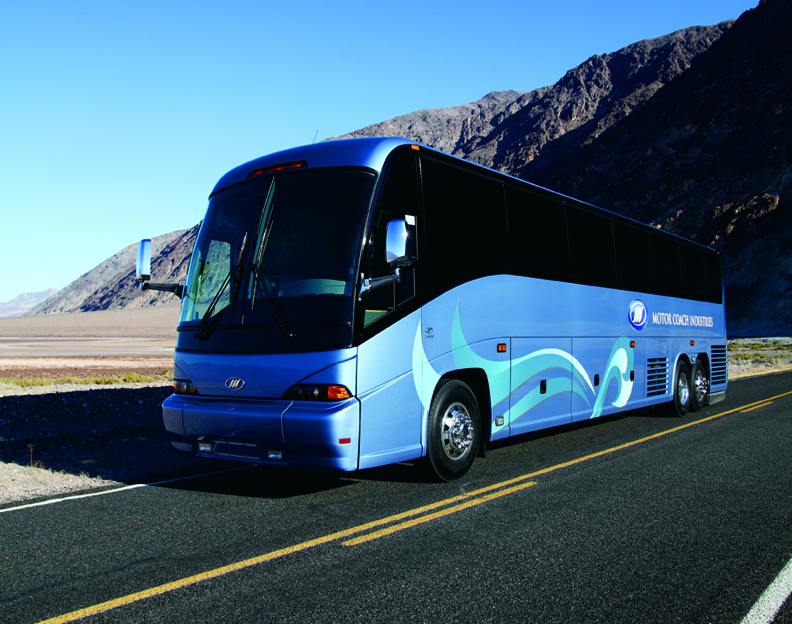
For some reason, we have received several questions lately on the various metals generally used in bus construction. This was probably expected since some of these metals have been in the news recently. Prevost has introduced aluminum luggage bay doors on their X-series coaches. Caio is putting aluminum siding on its new coaches and Setra is dipping their frames into a tank to coat them against corrosion.
I can go through some of the basic items on different metals without getting too involved with metallurgy. None of this is rocket science. In fact, I would bet that many of our tenured readers are already knowledgeable in this area. While we can provide some basic information, hard and fast rules are difficult because of differences in both bus construction and usage.
Let me start out by saying that there is no “best” bus for everyone and every application. One operator may want a local shuttle bus to operate three hours a day, transport 20 people around town, and have a useful life of 200,000 miles. Another operator will ask for a bus that will carry up to 50 people in long distance scheduled service and will last for 2,000,000 miles. Somewhat obviously, the “best” bus for each of these applications is not the same bus.
Next, let me suggest that a great deal depends on quality of construction and related longevity. Stainless steel and aluminum do not necessarily improve the quality of construction. However, they can help the bus last longer and improve resale value by reducing corrosion as the bus gets older.
A third point I feel compelled to bring up is galvanic corrosion. Using different metals in the same bus can cause problems where they join. I remember hearing more on this years ago. It appears that in recent times this concern is more under control.
A good place to start is to review some of the basic differences between the European and American bus markets and typical construction.
European coaches typically are expected to run fewer miles than on this side of the Atlantic. Bear in mind that it is less than 1,000 air miles from London to Rome so you do not put a lot of miles on a coach unless you run a tour beyond typical Western Continental Europe. Moreover, since tours are a major part of European coach operations, there is more pressure for newer coaches. Hence, it is not unusual for a European coach to be built from mild or carbon steel and have a useful life of about 1,000,000 miles. Since there are no major long distance scheduled service operations in Western Continental Europe and most of the tours are short by American standards, there is no strong demand for coaches with high longevity.
However, to be fair, I should mention that any of the European-built coaches that survive on the American market tend to be at least a cut above the standard European coach. In some cases, the export model going to America may have more features than coaches built for local use.
While coaches in Western Europe have primarily evolved around tourism, the bus industry in America started out primarily as scheduled service. Greyhound started out running between Hibbing and Alice, Minnesota and virtually all of the earlier larger bus companies were heavily involved with scheduled service.
Add to this the fact that the distance from New York to San Francisco is three times the distance from London to Rome. Hence, early bus design in the United States and Canada centered around longevity and durability. For the most part, I have no problem with suggesting that our domestic coaches (now primarily built in Canada) are easily the most durable in the world. They not only have a high stainless steel content but typically have a useful life of 2,000,000 miles or more.
When does it pay to use aluminum or stainless steel in addition to or instead of mild or carbon steel? This is a fairly typical question but, again, a great deal depends on the operator’s needs and the type of operation. The more years you plan to keep the bus, the more that stainless steel or aluminum would be a positive factor. Buses that are built to operate more than 1,000,000 miles are also good candidates for these metals. In addition, stainless steel or aluminum could be more important if residual value is a high priority to you.
Carbon or mild steel is the usual metal used in most buses that do not have a high longevity. The industry tends to define it as having no more than two percent carbon and no other appreciable alloying element. It is the most popular type of steel, is less expensive than other specialized types of steel and is generally easy to work with. Its biggest negative feature from our standpoint is corrosion. Iron in the steel mixes with oxygen in the air to form ferric oxide, forms of which are more commonly known as iron oxide or rust.
In earlier decades, many of the buses built in the United States used carbon or mild steel. It worked well for some makes and models and not so well with others. For example, Eagles were notorious for rust. There were people who unkindly suggested that if you stood close to an Eagle you could actually hear it rust. After looking at going to stainless steel, Eagle converted to CorTen (or “weathering”) steel. This tended to reduce the rust problem but is not as good as stainless steel in this area.
Carbon steel is almost always used for cutaways and other body-on-chassis buses in the United States and Canada. Since body-on-chassis buses rarely run for more than 500,000 miles, the use of stainless steel would be considered a waste of money by most people. However, I have seen cutaways that use some stainless steel in areas most prone to corrosion, such as doors and stepwells.
Temsa’s coaches coming to America have high stainless steel content. However, I have been told that Temsa will build some models using mild or carbon steel on customer request. This does reduce the price of the coach but it is more prone to corrosion. Setras are built with carbon steel but since their acquisition by Daimler, the frames are very carefully rust proofed in a cathodic dip tank at the Mercedes facility in Mannheim, Germany. Holes in the tubular steel allow the treatment to go both inside and outside of the frame members. The use of an electrical charge on the frame makes this process similar to plating and provides a very thorough coating.
Aluminum has been used in bus and coach production for a long time. There are different kinds of aluminum alloys with some less likely to suffer corrosion and some actually stronger than some steel alloys. The primary advantage of aluminum is its ability to withstand corrosion. Aluminum does react with oxygen in the air to produce Aluminum Oxide. This then typically coats the aluminum and tends to prevent any further corrosion.
A second advantage of aluminum is low weight. This can be increasingly important today when weight and ecology are important considerations. However, there are at least two disadvantages when using aluminum. One is the potential for galvanic corrosion when in contact with steel. The second is that most aluminum is not as strong as steel and hence is less appropriate for use as structural members that have to bear a lot of weight.
General Motors made good use of aluminum on many of their buses and coaches. The use of aluminum for siding was typical. What the industry called “silversiding” was actually aluminum. I note that many of the Scenicruisers ran more than three million miles before leaving the Greyhound fleet, suggesting that GM knew how to make steel and aluminum work well together.
Today we are seeing a reemergence of aluminum in buses and coaches. Its light weight and reduced corrosion are factors making it popular. I note that Prevost is now offering aluminum baggage bay doors on its X series coaches. In addition, I find it interesting that CAIO is putting aluminum siding on its coaches. I suspect that we will see more aluminum on coaches in the years ahead.
Of course, the “top of the line” as far as buses and coaches go is stainless steel. Also known as inox steel (from the French inoxydable), stainless steel is usually defined as a steel alloy with a minimum of 10.5 to 11 percent chromium content by mass.
The single biggest advantage of stainless steel is its reduced corrosion. Unprotected carbon steel tends to form iron oxide or rust when exposed to air and moisture. The rust is active and helps form more iron oxide. Since the iron oxide molecules are larger than iron molecules, the rust tends to flake and fall off. Hence, over time the carbon steel is reduced in size and in strength.
Stainless steel is stain-less, not stain-proof. The chromium in stainless steel mixes with oxygen in the air and forms a coating of chromium oxide that protects the metal from further corrosion. On the negative side, stainless steel is more expensive than carbon or mild steel. In addition, some people say that some types of stainless steel can be more brittle than mild steel and hence more difficult to work with.
Credit for introducing stainless steel into American coaches in a big way goes to Harry Zoltok, the founder of MCI. Challenged with building buses for Canadian Greyhound that could survive Canadian winters and pre-War Canadian roads, Zoltok developed a combination of platform integral construction and stainless steel that undoubtedly qualifies as the most durable type of bus ever built in any quantity. This goes a long way towards explaining why MCI has had an enviable reputation for durability and continues to enjoy a substantial market share.
However, I do give credit to other manufacturers for learning that stainless steel enhances the longevity of an already high-quality coach. Today, Prevost, Van Hool and Temsa coaches sold in the United States all have a high degree of stainless steel content.
I should at least briefly mention that we are seeing more and more plastics and similar materials being used in bus and coach construction. Bob Lee and his crew at Neoplan once developed a lightweight carbon fiber bus. Today’s modern buses typically use various types of plastics or fiberglass for front and rear caps, walls and sidings and even flooring. Their main advantage is light weight and a lack of corrosion. Although in most cases, these materials are not strong enough to be used for structural members.
Finally, for those people who have asked, the most durable American buses in the past were built with platform integral construction. This includes the popular GM coaches as well as the MCI coaches through the D model. The newer models built with tubular web frame construction have not yet met the three-million mile record of the Scenicruisers. However, it can easily be suggested that in todays operations, heavy in charters and tours rather than heavy scheduled service, coaches simply do not run as many miles as they used to.
Whether or not the top mileage makes any difference, tubular web frame integral construction appears to be replacing platform integral construction. The major reason for this is that platform integral construction tends to limit design possibilities in an era when design is increasingly important in a charter and tour market. In spite of this, I suggest that stainless steel will remain important in coach construction for a long time and we most likely will see more aluminum in the years ahead.
Saturday, November 22, 2014
Ruminations of a Road Rambler Milestone
Ruminations of a Road Rambler: One Year Anniversary

As of today, I’ve been living on a bus for exactly one year and two weeks. Many folks have been curious about my life as a nomad, so I thought I’d take a moment to share my experiences after this 12 month milestone. Click the link below for all the details.

First some stats on my rolling home: My home is a 1997 Prevost bus
which was manufactured in Canada as an standard bus and converted into
a motor home the same year by Liberty Coach in North Chicago, IL. The
bus has 340 square feet of interior space (40′ length x 102" wide)
along with a "basement" for storage (where your luggage would be stored
on a Greyhound bus). I get between 6 and 8 MPG depending on how fast
I’m driving and what type of terrain I’m covering. I also tow a Jeep
Liberty, which I can easily connect or disconnect in less than two
minutes. In order to afford this lifestyle, I sold my house in the
mountains west of Boulder, CO and have a few things in storage (which
takes up less space than a one car garage). This allows me to have no
debt of any kind (no mortgage, car payments, or credit card debt).
You can take a video tour of the bus on Inside Digital Photo’s video podcast in iTunes.

Modifications I’ve Made: The bus came with two sofas in the living
room. I’ve removed one of the sofas and replaced it with a lounge chair
and ottoman. I’ve made the dining room table my office by replacing one
chair with an Aeron office chair and the other with a table that holds
about a dozen hard drives and a color laser printer. I plan to add an
ink jet printer to the mix over the next six months (now that they’ve
gotten smaller).

Where I’ve Been During the Year: I’ve traveled through 22 states over
the last 12 months and visited more state and national parks than I can
keep track of. I’ve also visited many friends and made new ones along
the way. I’ve put exactly 15,871 miles on the bus since I bought it
last year. I started and ended my first year at Liberty Coach’s sales
location in Stuart, FL. My favorite place so far would have to be Utah.
Specifically the Utah, Arizona border near Page, AZ. There is simply so
much to see and photograph around that area that I can’t wait to return.

Unusual Parking Spots: You and I have a much different perspective on
parking. When I say "parking," what I really mean is "living." Whether
I’m in them for one night or several weeks, my parking/living spaces
have run the gamut from marvelous to mundane. I’ve parked everywhere
from the beach on the edge of Lake Powell to a spot marked "Bus
Parking" next to the Four Seasons hotel in Beverly Hills (thanks to Jeff at POG for the parking suggestion). Some of the
most wonderfully unexpected parking places have come from people who
read this blog. For instance Marci found me a nice place to park near
Ocala, FL that had a view of a lake (I even got a haircut outside near
the edge of the lake). Kathey found me a free parking spot on Key West
in Florida and arranged kayaking and other outings with the locals of
Key West. Scott Sheppard from Inside Mac Radio even helped me find a
free parking spot within a few blocks of the Golden Gate Bridge. I want
to thank everyone who has taken the time to cheer me on through lending
a hand finding parking spots or suggesting little known places to
visit… you’ve made the journey much more interesting and rewarding. I
look for these unusual parking places because I rarely pay to park
since the bus has storage tanks and batteries that allow me to boondock
for over a week before I have to dump or fill my tanks. I’d also rather
be parked in an interesting location instead of looking out the window
at dozens of other RVs at a campground.

Before moving onto the bus, I had visited a Wal-Mart maybe twice. Now
it’s one of my most common places to go grocery shopping. That’s
because most Wal-Marts will allow you to park overnight in their lot
for free. I’ve met all sorts of interesting people in Wal-Mart parking
lots including a group of Germans who were returning from an RV
vacation that took them across the county and a guy who lives on a 1958
Crown bus.

What I love about my mobile lifestyle: I get to explore new places
almost every week… places I’d usually only get a chance to explore if
I were to take time off for vacation. I can stay at a National Park for
weeks on end. During that time, I usually wake up before sunrise and go
out shooting, come back to the bus and work a full day (nicely broken
up by a a mid-day hike) and then shoot again during the golden hour
before sunrise. While doing that, I can sleep in my own familiar bed
and have all my belongings with me. This is also my first winter where
I’m avoiding the cold weather (I’ve only lived in MN and CO before).
Life is much more interesting when you have something new to experience
every week.
I’m amazed at how many people I meet and friends I run into (unplanned
meetings). For instance, when I was exploring near Fort Bragg in
California, I hiked up a sand door while scouting for shooting
locations and noticed 15-20 people standing at the top of the dune. As
I got closer, I noticed cameras dangling from their necks and then
realized that Greg Gorman and Jeff Schewe were teaching a photography
class right in front of me. Had I waited five minutes more before
hiking up the dune, then I would have never seen them since they would
have been out of site in a more remote. I hung out with them for a day
and had a really good time.

I’ve even had friends like Jeff Limbok come knocking on the door when I
was parked in a remote location in Utah. He was sailing by doing 70MPH
when he caught a glimpse of the bus on side road and stopped to visit
(we had no idea we were in the same area of the country). We explored
Lower Antelope Canyon and got together for dinner with hyper realistic
artist Bert Monroy who was also in the area. In fact, I see more
friends (and make more new ones) than I ever did when living at a fixed
location.
Other friends have invited me into their homes on holidays. Like when I
spent Thanksgiving with Marv Miller and his family in Novato, CA. I’ve
also bumped into relatives that I haven’t seen in years, including my
cousins Jimmy and Sara.
I’ve also e-mailed people that I don’t know to ask if they’d like to
get together for dinner and, so far, have never been turned down. This
has included some of the people who have inspired me over the years
like famous darkroom photo compositor Jerry Uelsemann and his wife and
digital artist Maggie Taylor, who had me as their guest for a day. The
shear number of people I’ve run into over the last year is staggering.

The bus is a very popular place during conferences and trade shows. I’ve had quite a few parties on the bus. Having a dozen friends on the bus makes for a comfortable gathering… but when over 30 people show up it gets to be a little crowded.

Unexpected Places to Meet New Friends: The Prevost Owners Group is a
great bunch of people who created an on-line community of bus owners
right around the time I bought my bus. They have a yearly rally where
everyone gets together to swap stories and share maintenance tips (the
next one will have over 60 buses together in one place). I attending
their first rally right after purchasing the bus and met a great group
of people who have become good friends. I regularly visit these guys as
I travel through their home states and they help me anytime I have a
question about one of the systems on my bus or where I should explore.
Jeff, Jerry, Mango, Jon, Lew and the others are great on-line buddies and
even better in person.
What I don’t like about this lifestyle: Having to find a new doctor,
dentist, hairstylist, etc, whenever you need them. It’s not that big of
a deal, but it’s one thing that takes time to adjust to. Also, having
to always think about where you’ll end up parking. I’m quite used to
finding places to park and it doesn’t take much energy to do so, but it
is something I have to think of on a daily basis. I’d like to
eventually find a companion who can share in my adventure, but it’s not
easy to start a relationship when you’re always on the move (not that it’s all that different of a situation than when I lived in a remote area in the mountains of Colorado). Don’t get
me wrong, I have zero desire to live in a fixed location and absolutely
love my lifestyle.

Problems I’ve Encountered Along the Way: The first month I owned the
bus, I had to replace a $700 tire. That happened because my mirrors
weren’t adjusted properly, which caused a large blind spot. I’ve also
gotten stuck in sand (twice!). Verizon cut off my wireless internet
access claiming that I violated my contract (but were unable to show me
exactly which clause I violated). I went through a big sand storm,
which blew sand into every crevice of my jeep, which caused sand to be
expelled into the interior every time I turned on the air conditioning.
Many more things have happened, but none of them have forced me to stop
moving on. With one exception that is… my Jeep was broken into when I
was parked across the street from my publisher’s office in Berkeley, CA
and one of the things that was stolen was the clips that I need to
connect the Jeep to the back of the bus. It took a full day to find
replacements and then I was on the road once again.

What Most People Don’t Understand About My Lifestyle: 1) I have a
"normal" bed and shower, so there’s no need to offer me to take a "real
shower" when I stop by to visit. In fact, my shower is nicer than 99%
of the ones I see in most homes. I’ve only set the temperature on my
shower once and just have to turn it on and count to five before
entering the shower. Because it’s thermostatically controlled, it will
return to the exact temperature I last had it set to the next time I
want to shower. The one thing I really appreciate is when I’m offered
to use someone’s laundry facilities since the bus only has a tiny
combination washer/dryer, which isn’t sufficient for normal loads of
laundry. 2) I feel just as secure in the bus as I did in any house I’ve
ever lived in. People are always asking if I’m scared about this or
that. I’m not. The bus locks up tight and you’d have to use a ladder
and have something pretty huge to throw through a window to get into
the bus. 3) Yes, diesel prices are high, but I charge clients for
flight and hotel when I show up to speak even though I drove and that
helps make the cost of fuel more bearable. Also, most expenses go
through my company, which makes them pre-tax expenses. 4) Driving a big
bus grows on you. It takes about a month, after which time you might
actually prefer to drive the bus over a car. The drive is smooth, the
driver’s seat has its own air suspension and you can see over
everything except for semi-trucks. When you signal and start to move
into another lane, people move out of your way. 5) I have no plan for
exactly how long I want to live this way, so please stop asking me
about that. To me, it’s like asking you how long you plan to live in
your current home. I find that most people don’t have an answer to that
question. Same here. I’ll keep living this way until I find something
that is more compelling and I don’t see that happening anytime soon.
There is so much to see in this country that I could easily see me
living this way for the next ten years.

How Has It Changed My Life: 1) I no longer watch any television because
I have enough going on in my life that I don’t need to be entertained
by looking into a box for hours on end. I also don’t care which movies
are in theaters for the same reason. I’m currently trying to cut back
on the amount of time I spend on-line to make more time to exploring
the country. 2) I no longer buy crap that I don’t really need. When you
only have 340 square feet to live in, you automatically get rid of
anything that is not essential for daily life and stop having any
desire to buy something you don’t already have an active need for. 3)
Retirement has always been a vague concept that would happen someday
decades into the future. I now have daily motivation to get to
retirement as soon as possible because I want to spend more time
exploring and less time having to be in any pre-determined location
that is dictated by work. 4) The way I approach life has shifted from
working like crazy in the hope that some day in the future I’ll be able
to have the freedom to do what I’d enjoy each day, to actively enjoying
every day and feeling much more fulfilled in the process.

Future Plans: I plan to keep the bus in Florida until I get back from
my trip to Russia on April 19th. I’m thinking about driving up the East
coast all the way to Canada, but the beauty of this lifestyle is that I
can be very flexible, so I might end up with a different plan as the
year progresses.
Friday, September 26, 2014
Logistics Launches Luxury Intercity Service

| |||
Blue
Hill Logistics (BHL), a subsidiary of Blue Hill Investment Pvt. Ltd.,
has launched super-luxury intercity bus service titled ‘Luxuria’ between
Bengaluru and Chennai. The Volvo buses have been designed by ace
automobile designer Dilip Chhabria. With an initial investment of Rs 30
crore for 12 buses and infrastructure it is likely to be scaled upto Rs
450 crore in the next seven years with acquisition of 250 buses.
The Luxuria bus service has been flagged off today with two buses departing at 5 am and 7 am and another two buses will begin operations in the night at 10 pm and 11 pm from Whitefield going via the Luxuria lounge at HSR Layout Bengaluru. The first three services will culminate at Hotel Sabari Classic on OMR Road at Sholinganallur in Chennai and the last service departing from Bengaluru will culminate at Hotel Radha Regent, Koyambedu Chennai. At all the above mentioned times of 5am, 7 am , 10pm and 11pm the bus service will be running from Chennai too. The ticket for a one way journey is priced at Rs 1,800. Prabhu Ramachandran, Director, Blue Hill Group said, “Luxuria is a novel concept for travel in India. We believe that we have the first mover advantage in this category and in the next three years we plan to expand our services to other major cities in the country.” He further added that, “Nilgiris Supermarket Chain was the first self-service supermarket in India and pioneered the concept of retail shopping experience in India. Luxuria we believe will be a true trend setter in travel in India. The designs of the buses are a true embodiment of style by Dilip Chhabria and will become a benchmark in travel.” “These ultra luxury buses are targeted to air travellers. The buses are designed to give Business Class and First Class luxury and comforts at far lower prices,” said Pankaj Rampal, COO, Blue Hill Logistics. |
Monday, September 8, 2014
Notice for Bus Digest Fans (Update)
Bus Digest will not be available on The Greyhound Group page, but by subscription only. Your free subscription is available here. All your transportation and special interest and feature stories will be seen only in Bus Digest. The Greyhound Group will remain as a discussion group and photograph's etc. Please submit below.
Published by Wyatt Olsen
Update : Please take this opportunity to sign up
Tuesday, June 3, 2014
This Week Lifestyle In Luxury Motorhome's

Bella Terra of Gulf Shores RV Resort: Luxury RVing on the Alabama Coast

To brilliant sunsets and unforgettable good times, Gulf Shores, Alabama is also the site of Bella Terra of Gulf Shores, a resort that brings luxury RVing to life in a tropical oasis. The 40-acre resort is ideally located just 6.5 miles north of the Gulf of Mexico, allowing quick access to the beautiful beaches of the Emerald Coast.

Surrounded by lush farmland, Bella Terra is the perfect respite from outside distractions, but still just minutes from shopping, dining and entertainment. And there’s more good news in that direction: the Blue Collar Comedy Entertainment company recently closed on a property two miles north of the resort, initiating a $175-million dollar entertainment complex that’s scheduled to open in 2015.

This winning combination of beautiful natural surroundings and nearby attractions with top-notch facilities has not gone unnoticed in the luxury RVing community, with buyers coming in both from the U.S. and Canada. “Our motor coach-exclusive facility that has grown steadily since opening in 2008,” said Activities and Operations Manager, Courtney Fox. “Since then, Bella Terra has gained national recognition for its remarkable facilities, outstanding customer service and spacious lots.”

Upscale amenities include a 6,000-square-foot clubhouse, available to guests 24-hours-a-day with a fully equipped fitness center, a private movie theater, a massage room and a bar. The infinity-edge pool is open year round—a favorite of the snowbird guests. “We’re also pet friendly!” said Courtney. “Our fenced-in dog park is an ideal feature for families traveling with their furry friends.”
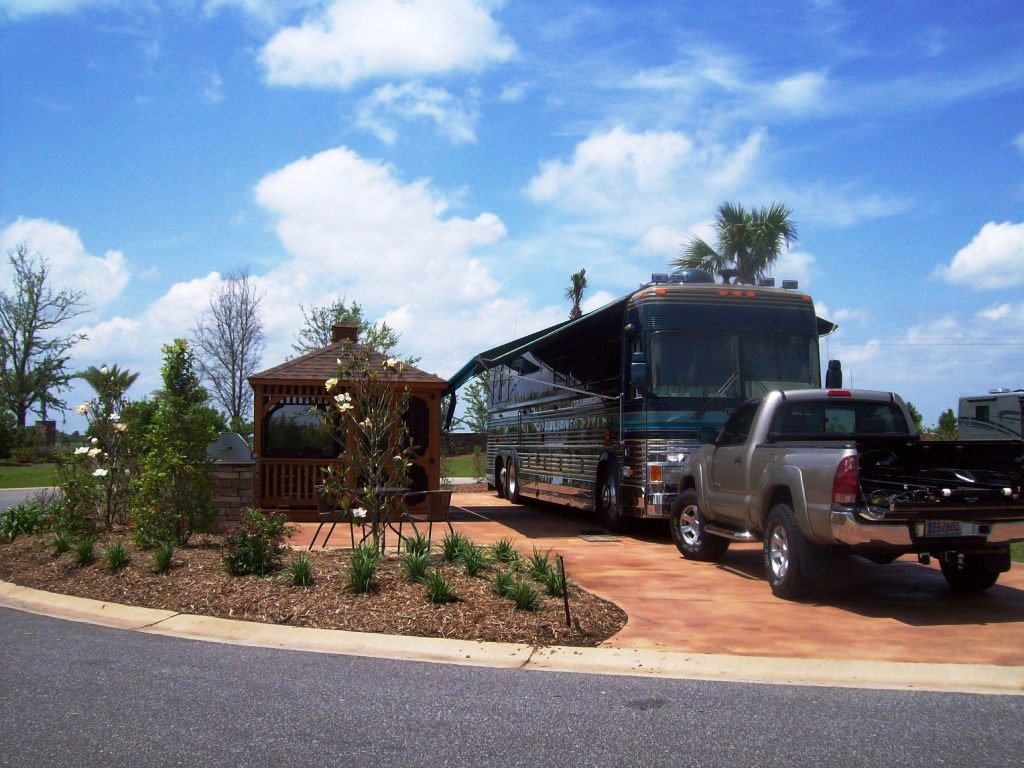
The final phase of this award-winning resort opened this spring, adding 65 more deeded lots to the inventory. In addition to full ownership, they also offer RV lot rentals. All lots include professional landscaping for privacy, concrete pads, built-in patios, utility hook-ups and optional upgrades including gazebos, outdoor entertainment centers, and storage units.
Their over-sized Class A RV lots – some as large as 5,000 square feet – are designed to satisfy Class A RV motor coach needs.
For more details on this truly top-notch luxury RV resort or to book online, visit www.bellaterrarvresort.com.
 |
| lifestyles In Luxury Motorhome's |
Subscribe to:
Posts (Atom)